Run It or Frame It: How Your Vintage RC Mindset Shapes Everything About the Hobby
Photo: Biswarup Ganguly, CC BY 3.0, via Wikimedia Commons
Picture this: two guys show up to the same vintage RC meet with identical Tamiya Hotshots, both in near-perfect condition. One of them spends the afternoon pinned to the track, roosting dirt and grinning like a kid. The other one keeps his on a display stand and winces every time someone gets too close. Neither of them is wrong. But they're living in completely different hobbies — and that gap matters more than most people in the community want to admit.
This isn't a new argument. The "run it" crowd and the "restore and preserve" crowd have been side-eyeing each other at club meets since the mid-90s. But as vintage RC keeps growing in popularity — new blood coming in through eBay rabbit holes, estate sale finds, and YouTube nostalgia trips — the philosophical divide is getting sharper. And understanding where you land isn't just about weekend preferences. It shapes what you buy, how you spend your money, how you treat other collectors, and whether this hobby has a healthy future.
Two Tribes, One Hobby
Let's call them what they are: Bashers and Builders. The labels aren't perfect, but they work.
Bashers — and we're using the term with full respect — are the folks who believe an RC car exists to be driven. Hard. They'll grab a vintage Associated RC10 or a Kyosho Optima and put actual laps on it. They're fine with scuffs. They'll swap in a modern ESC if the original one is toast. They might run reproduction tires because the originals are too brittle to grip anything. For them, the car is a vehicle for experience, not a museum piece.
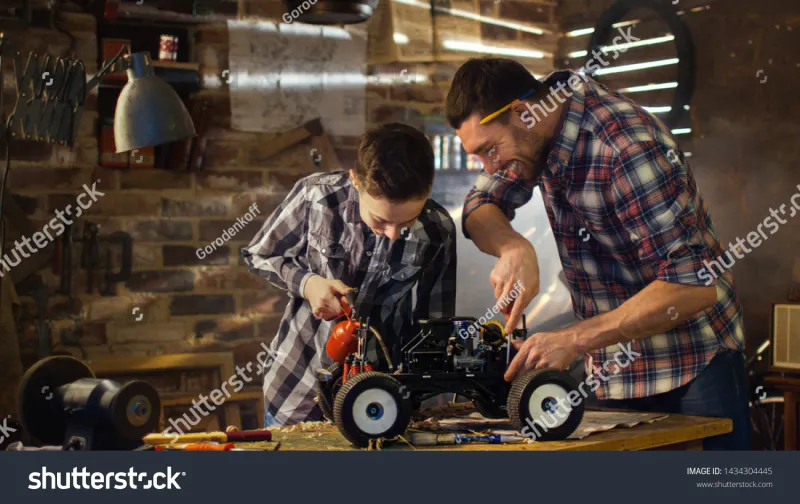
Builders — or restorers, or preservationists, whatever label fits — are playing a different game entirely. They're sourcing NOS (new old stock) parts from dusty hobby shop back rooms in rural Ohio. They're agonizing over period-correct paint codes. They're probably not running the car at all, or if they do, it's on a smooth surface with a camera rolling so they can document every pass. The build process is the hobby for them.
Both approaches are completely valid. But they create friction when they collide.
How Philosophy Drives the Wallet
Your mindset determines your spending habits in ways you might not have mapped out consciously.
Bashers tend to buy more cars over time. They wear things out, they upgrade, they experiment. They're often the ones keeping parts suppliers and reproduction kit makers in business. A Basher might go through three vintage buggies in a year and come out the other side with a deep mechanical understanding of each platform. They're practical spenders — they'll pay for function, not provenance.
Builders, on the other hand, can sink an enormous amount of money into a single car over years. They're the ones driving up prices on original-box kits. They're the reason a mint Tamiya Sand Scorcher with all its original stickers can fetch $800 on eBay while a runner version of the same car goes for $150. That price gap isn't random — it's philosophical demand.
The tension shows up at swap meets and online marketplaces constantly. A Basher sees a rough-condition RC10 for $60 and thinks "great runner project." A Builder sees the same car and gets annoyed that someone's going to put miles on what could've been a restoration. Meanwhile, the Builder's willingness to pay a premium for clean examples is what makes the market work for everyone selling.
Maintenance Culture: Meticulous vs. Functional
Walk into a Basher's workshop and you'll probably find a pegboard of frequently-used tools, a bin of spare gears, a few half-finished chassis on the bench. It's functional. Things get fixed when they break, upgraded when the fix isn't worth it.
A Builder's workspace looks different — organized by era, maybe. Parts bagged and labeled. A dedicated corner for stripping and repainting bodies. The kind of setup where someone has a spreadsheet tracking which cars still need which components.
Neither approach is superior, but the maintenance philosophies create real differences in how community knowledge gets passed around. Bashers tend to generate practical, real-world repair knowledge fast. They've stripped more threads, replaced more motors, and diagnosed more weird handling issues than most restorers ever will. Builders, meanwhile, accumulate deep historical knowledge — they know which year Tamiya changed a specific screw thread, or why a particular batch of tires aged worse than others.
The hobby is richer when both types are talking to each other. The problem is they often aren't.
Community Friction and How to Ease It
The worst version of this divide plays out in forums and Facebook groups. Someone posts a photo of a vintage Traxxas Rustler they're planning to bash, and a restorer jumps in the comments to lament what a shame it is. Or a Builder posts a pristine restoration and a Basher can't resist commenting that it "should be on the track, not a shelf."
This stuff is corrosive. It pushes newcomers away, and newcomers are the lifeblood of any hobby community.
Here's a reframe worth considering: Bashers and Builders actually need each other. Builders create the historical record — they're the ones ensuring that future generations can see what these cars originally looked like, how they were built, what the hobby was actually like in 1987. Bashers keep the hobby kinetic and accessible — they're the ones at the track on Saturday, showing a curious teenager how a vintage buggy handles, keeping the social energy alive.
The clubs and communities that thrive are the ones that make room for both. Separate run sessions for those who want to keep things gentle. Swap meets where restorers and runners can trade knowledge along with parts. Build threads that respect both a mint restoration and a creative bash-ready build.
What This Means for the Long Game
Vintage RC is at an interesting crossroads right now. The cars that were new in the 80s and early 90s are now 30-plus years old. Original parts are genuinely finite. Bodies crack. Electronics fail. Every car that gets bashed hard without any documentation is a small piece of hobby history that disappears.
But a hobby where everything sits behind glass isn't really a hobby — it's a museum. And museums don't tend to recruit passionate new members the same way a Saturday afternoon at a dirt oval does.
The long-term health of vintage RC probably depends on both tribes finding a workable truce. Builders keeping the historical thread alive. Bashers keeping the energy and the fun front and center. And everyone agreeing that the worst outcome isn't a scuffed chassis — it's a community too fractured to pass the hobby on to the next generation.
So which one are you? And more importantly — have you ever really talked to someone on the other side?
Because that conversation might be the most valuable one you have at your next club meet.