Shelf Life: How to Store Your Vintage RC Collection So It's Still Race-Ready in 10 Years
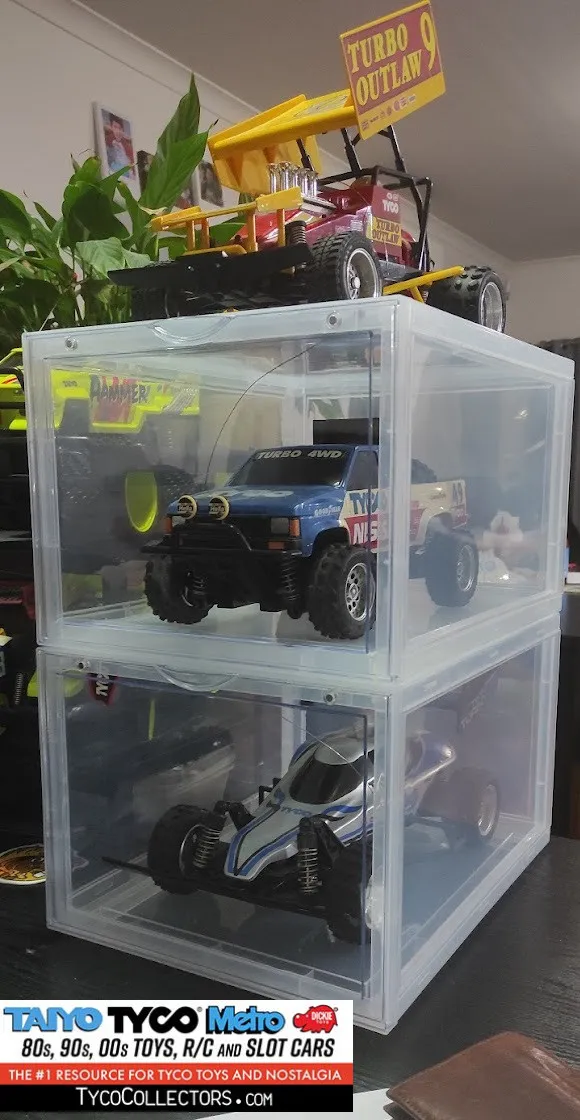
Photo: organized hobby storage shelves with RC cars in clear plastic bins garage, via tycocollectors.b-cdn.net
Most vintage RC cars don't die on the track. They die in storage.
It's a slow process — a little humidity here, a temperature swing there, maybe a mouse that decides your foam bumper looks like excellent nesting material. By the time you dig out that Tamiya Grasshopper or Associated RC10 from the back of the garage, what you find can range from "needs a good cleaning" to "complete tragedy." The good news is that proper storage isn't complicated or expensive. It just requires a little intentional thinking before you put things away.
This guide is for anyone who owns more vintage RC cars than they can run at any given moment — which, let's be honest, is most of us.
The Three Villains: Heat, Humidity, and Critters
Before you start buying bins and bubble wrap, it helps to understand what actually damages stored RC cars. Almost every storage-related failure traces back to one of three culprits.
Heat is the sneaky one. Attics in the American South and Southwest can hit 140°F on a summer afternoon. That kind of sustained heat warps polycarbonate bodies, degrades rubber tires, causes decals to bubble and peel, and accelerates the breakdown of older plastics that are already brittle with age. Even in more moderate climates, a garage that bakes in July is not a safe place for a vintage chassis without some protection.
Humidity is arguably worse, because its damage compounds. Moisture causes metal parts to rust, corrodes battery contacts, fogs clear lexan bodies, and causes vintage foam inserts to break down into that familiar crumbly mess. Basements are the classic offender here, but anywhere without climate control can develop humidity problems during certain seasons.
Pests don't get talked about enough. Mice, in particular, are relentless. They chew through foam, wiring harnesses, and even some softer plastics. They nest in anything hollow. A single mouse over a single winter can do more damage to a stored car than a decade of temperature fluctuation.
Once you've accepted that these three things are working against you, the storage strategy basically writes itself.
Picking Your Storage Space
Not all storage locations are created equal, and the right choice depends on what you're working with.
Basements are generally the best option in most of the US, as long as you manage moisture. Ground-level temperatures stay relatively stable year-round, which is great for plastic and rubber. The problem is that basements can be damp, especially in the Midwest and Northeast. A mid-sized dehumidifier running during humid months makes a significant difference. Aim to keep relative humidity below 50 percent.
Attics are almost always the worst choice for long-term storage of anything heat-sensitive — which describes nearly every component on a vintage RC car. If your attic is your only option, invest in proper insulation and consider a small portable AC unit or at minimum a thermometer you check regularly. Most hobby veterans will tell you: if the attic gets above 90°F in summer, find somewhere else.
Garages fall somewhere in the middle. Attached, insulated garages in moderate climates can work reasonably well. Detached garages in extreme climates — whether Phoenix or Minnesota — are tough. The temperature swings are hard on everything. If you're storing in a garage, keep cars off the floor (cold concrete transfers moisture), and consider a small space heater with a thermostat during winter months.
Climate-controlled interior spaces — a spare bedroom, a finished basement, a dedicated hobby room — are the gold standard. If you have the space, use it.
The Right Containers Make a Big Difference
Once you've sorted out your location, container choice matters more than most people think.
Hard-sided plastic bins with locking lids outperform cardboard boxes in every category. Cardboard absorbs moisture, provides zero pest resistance, and offers no structural protection. Clear bins are especially useful because you can identify contents at a glance without digging through a stack.
For extra protection, toss a few silica gel desiccant packets inside each bin. These are cheap, reusable (just dry them out in the oven occasionally), and genuinely effective at absorbing the moisture that sneaks in when you open and close containers.
For bodies and fragile shell components, wrap them individually in acid-free tissue paper before storing. Regular newspaper can transfer ink and cause discoloration over time — not ideal for a vintage body you've spent hours detailing.
If you're storing completed, fully assembled cars, consider hanging them or mounting them to a pegboard wall rather than stacking them in bins. Stacking puts weight on delicate suspension components and bodies in ways they weren't designed to handle.
Battery Storage: Don't Skip This Step
Old NiMH and NiCd packs need specific handling before long-term storage. Leaving a battery fully charged in storage is one of the fastest ways to kill it. Most battery experts recommend storing NiMH packs at around 40–50 percent charge in a cool, dry location. Check on them every few months — if any pack feels swollen or has developed visible corrosion at the terminals, pull it from storage immediately.
For cars with vintage speed controllers or receivers that use AA or AAA batteries, remove them entirely before storing. Alkaline batteries left in equipment for years are a guaranteed corrosion problem. This is one of those mistakes that's so easy to avoid and so common it's almost a rite of passage in the hobby.
If you're storing vintage NiCd packs, those can actually benefit from being stored fully discharged. Check the manufacturer's original guidance if you can find it, or consult community resources — battery chemistry differences matter here.
Pest Prevention That Actually Works
Don't rely on a single line of defense against mice and insects. Layering your approach is more effective.
Sealing gaps around pipes, conduits, and foundation cracks in your storage area is the most impactful thing you can do. Steel wool stuffed into small openings is a classic and genuinely effective deterrent — mice can't chew through it. Pair that with snap traps (more reliable than glue traps for long-term monitoring) placed along walls near your storage area.
For insects, cedar blocks placed inside storage bins are a low-effort, chemical-free option that discourages a range of pests. Avoid mothballs — the odor can penetrate plastics and foam over time, and getting that smell out of a vintage body is a miserable experience.
Build a Simple Inventory System
This one isn't about preservation, strictly speaking — but it will save your sanity.
Label every bin clearly, not just with the car model but with what's inside (body, chassis, electronics, spare parts). Take photos of each stored car before sealing it up. A simple spreadsheet or even a notes app on your phone can track what you have, where it's stored, and when you last checked on it.
Setting a calendar reminder to do a storage walkthrough every three to four months keeps small problems from becoming expensive ones. A quick visual check takes ten minutes and can catch a failing desiccant pack, early rust, or evidence of pests before real damage sets in.
The Payoff
There's something genuinely satisfying about pulling a car out of long-term storage and finding it exactly as you left it — tires still supple, body still bright, electronics still functional. That outcome isn't luck. It's the result of a few smart decisions made before the bin lid went on.
Your collection is worth the extra effort. Treat it like the vintage gear it is.