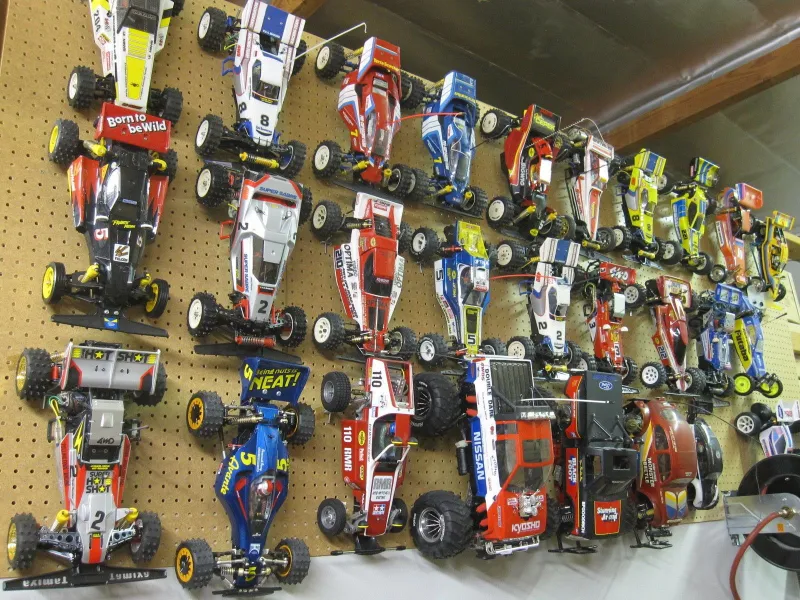
Hunting Down the Holy Grail: A Practical Roadmap for Finding Rare Parts for Classic Tamiya and Associated RC Cars
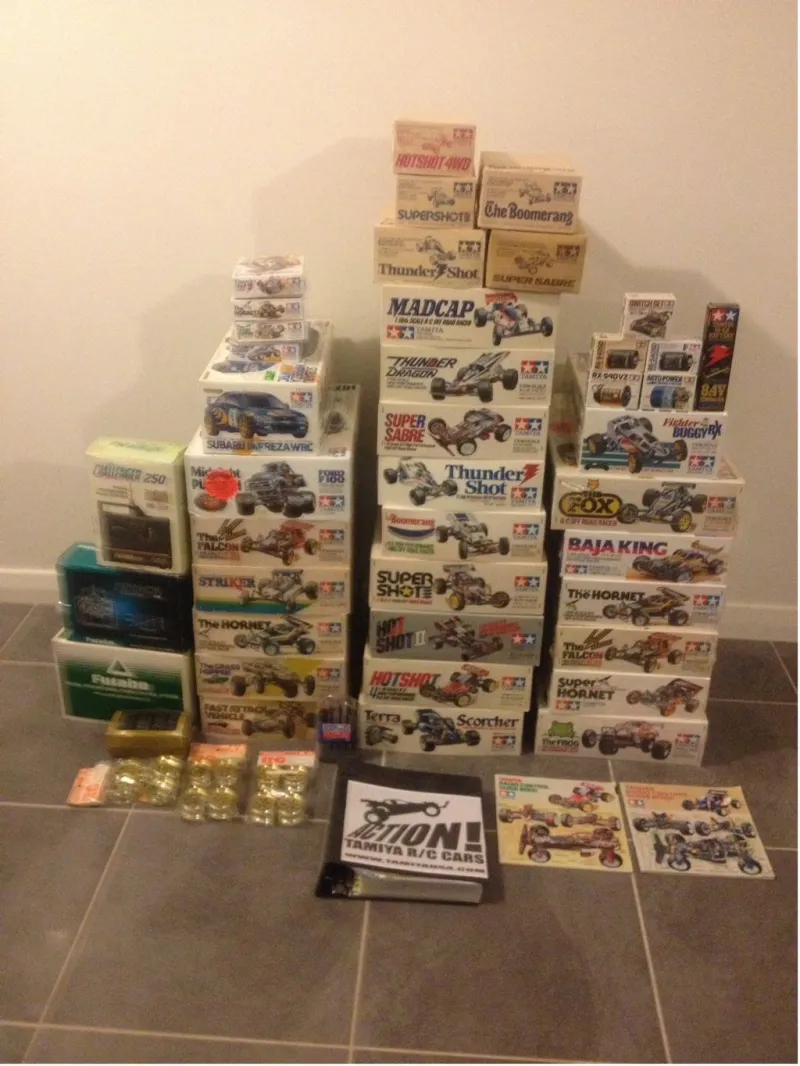
Photo: vintage Tamiya RC car restoration parts collection workbench, via www.tamiyaclub.com
There's a special kind of frustration that comes with staring at a half-finished restoration project, missing one critical piece that seems to have vanished from the face of the earth. Maybe it's a Tamiya Frog shock tower. Maybe it's an Associated RC10 gold tub. Whatever the missing link is, the hunt is real — and for a lot of vintage RC enthusiasts across the US, it can feel like chasing a ghost.
But here's the good news: the vintage RC parts ecosystem has quietly exploded over the past decade. Between dedicated online communities, specialty vendors, and even modern manufacturing technology stepping in to fill the gaps, finding what you need is more achievable than it's ever been. You just need to know where to look.
Start With the Obvious — eBay Is Still King (With Caveats)
Let's get this one out of the way first. eBay remains the single largest open marketplace for vintage RC components, period. On any given day, you'll find everything from NOS (new old stock) Tamiya Sand Scorcher body shells to original Associated RC10 transmission parts. The sheer volume of listings is unmatched.
That said, eBay requires patience and a sharp eye. Pricing can be wildly inconsistent — the same part might sell for $8 one week and $65 the next depending on how the listing is worded and who's watching. Set up saved searches with email alerts for specific part numbers and model names. Use the "sold listings" filter to get a realistic sense of what something is actually worth before you bid. And always check seller feedback carefully; misidentified parts and incorrect photos are common pitfalls.
Pro tip: Search using both the model name and the Tamiya part number if you know it. You'll surface listings that casual browsers miss entirely.
Facebook Groups and Forums — Where the Real Deals Happen
If eBay is the supermarket, vintage RC Facebook groups and forums are the farmer's markets — more personal, often better priced, and full of people who actually know what they're selling.
Groups like "Vintage RC Tamiya Collectors" and "Vintage RC Racing USA" on Facebook have tens of thousands of active members. Parts show up in these spaces regularly, and because you're dealing directly with fellow hobbyists, prices tend to be fairer and descriptions more accurate. It's also a great place to post a "WTB" (want to buy) request — sometimes someone in the group has exactly what you need sitting in a parts bin they forgot about.
On the forum side, RC Universe and RC Tech both have dedicated vintage sections with active classifieds. These older-school platforms might feel dated, but the communities there are deeply knowledgeable and genuinely helpful.
Specialty Vendors Worth Bookmarking
A handful of vendors have built entire businesses around the vintage RC niche, and they deserve a permanent spot in your bookmarks.
Vintage RC Warehouse (based in the US) stocks a rotating inventory of original and reproduction parts for classic Tamiya models. They're particularly strong on Hotshot, Boomerang, and Falcon components. Stock moves fast, so checking back regularly pays off.
RC Mania and Tower Hobbies occasionally carry reproduction parts for more popular vintage platforms, especially when demand is high enough to justify a production run. It's worth checking their clearance sections too — older inventory sometimes surfaces at steep discounts.
For Associated fans specifically, AE (Associated Electrics) still manufactures some legacy components for the RC10 lineup. It's worth reaching out to their customer support directly if you're looking for something specific — they occasionally have warehouse stock that doesn't show up online.
The 3D-Printing Revolution — A Game Changer for Obscure Parts
This is where things get genuinely exciting. The rise of affordable, high-quality 3D printing has completely changed the equation for parts that simply don't exist anywhere else.
Platforms like Thingiverse and Printables host a growing library of community-designed files for vintage RC components. Tamiya Grasshopper body mounts, RC10 servo trays, Hornet bumpers — people have already modeled and shared files for an impressive range of hard-to-find pieces. If you have access to a printer (or know someone who does), you can often produce a functional reproduction for just a few dollars in filament.
For parts that require more precision — like gears or structural components — services like Shapeways and local print shops can produce parts in nylon or resin that hold up surprisingly well under real-world use.
Mike Harrington, a vintage RC restorer based in Ohio who's been building classics for over 20 years, puts it plainly: "3D printing saved two of my builds last year. I needed a front bulkhead for a Tamiya Thundershot, and there was simply nothing available anywhere. I found a file online, had it printed locally, and it fit perfectly. Five years ago that car would've stayed on the shelf indefinitely."
Japanese and European Importers — Don't Sleep on Overseas Sources
Tamiya is a Japanese company, and Japan has a thriving vintage RC market with different inventory than what circulates in the US. Sellers on Yahoo! Japan Auctions regularly list NOS and used parts that are essentially impossible to find domestically. Services like Buyee and ZenMarket act as proxy buyers, letting US collectors purchase from Japanese listings without needing a Japanese address or language skills.
Yes, shipping adds cost and lead time. But for truly rare components — think original Tamiya Fighting Buggy or Wild One parts — the Japanese market may be your only realistic option.
Real Talk: The RC10 Gold Tub Search
To illustrate how this all works in practice, consider the experience of Dave Kowalski, a collector from Michigan who spent eight months tracking down an original Associated RC10 gold tub for a competition-spec restoration.
"I hit every avenue — eBay, Facebook groups, forums, specialty vendors. I found a few, but the prices were insane or the condition was rough," Dave recalls. "Eventually I posted in an RC10 Facebook group with photos of what I needed, and within a week someone messaged me with a NOS tub they'd had in a box for 30 years. Paid a fair price, and the build came out exactly how I wanted."
His takeaway? "Post everywhere. Tell people specifically what you're looking for. The community wants to help — they just need to know what you need."
Building Your Own Parts Network
The single best long-term strategy for sourcing rare parts isn't any one website or vendor — it's building relationships within the community. Attend local RC races and swap meets. Join multiple online groups and contribute genuinely. When you have duplicate parts, offer them to others at fair prices. Reciprocity is real in this hobby.
Keep a detailed want list and share it publicly. You never know who's sitting on a garage full of vintage RC parts and just needs someone to ask.
The hunt is part of the hobby. And with the right roadmap, even the rarest components are findable. Get out there and start digging.