Old School Is the New Cool: Why Vintage RC Cars Are Leaving Modern Nitro Models in the Dust
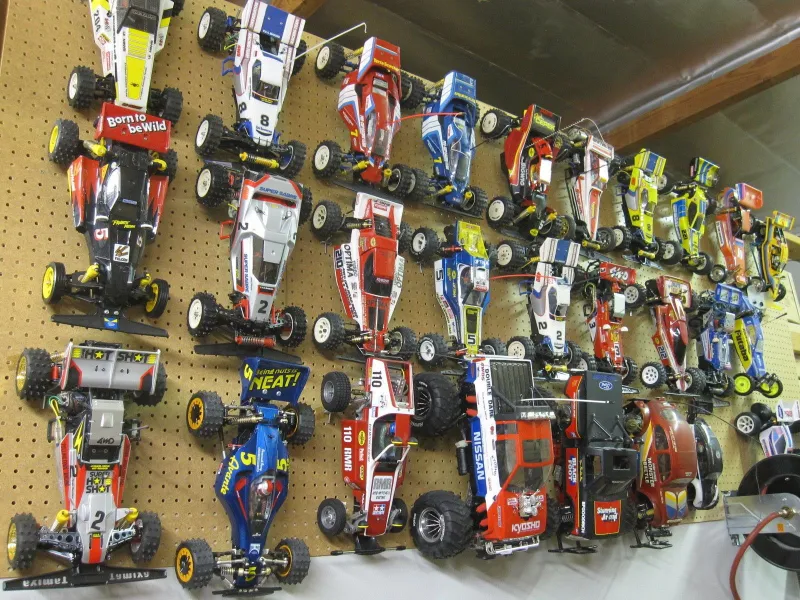
Photo: vintage 1980s RC car collection display shelf hobby room, via i.pinimg.com
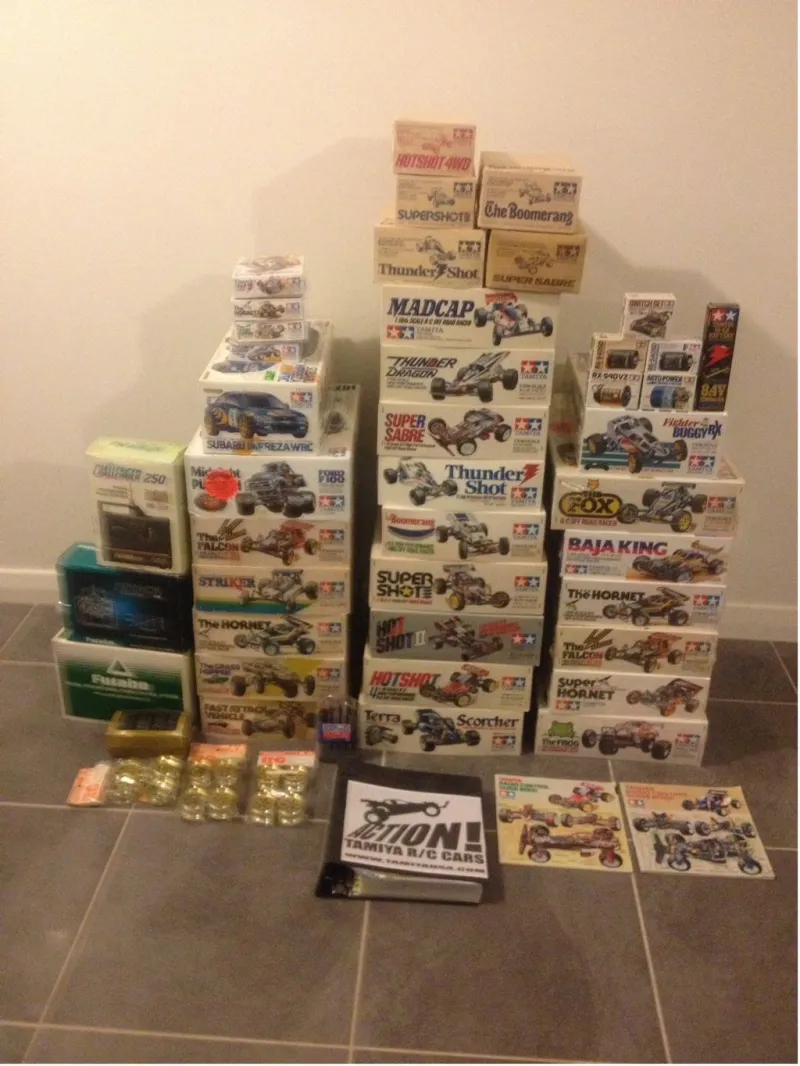
Walk into any RC hobby shop in America today and you'll notice something a little unexpected. Tucked alongside the latest brushless speed machines and high-end nitro rigs, there's a growing shelf space dedicated to vintage-style kits, reproduction parts, and re-release classics. On eBay, original 1980s Tamiya kits regularly sell for multiples of their original retail price. Facebook groups devoted to vintage RC have exploded in membership. Something is clearly happening here — and it's worth paying attention to.
The vintage RC market isn't just holding steady. By most measurable indicators, it's growing — and in some segments, it's actively outperforming interest in modern nitro-powered models. That's a remarkable shift, and the reasons behind it tell us a lot about where the hobby is heading.
The Nostalgia Factor Is Real — But It's Only Part of the Story
Let's start with the obvious: nostalgia is a powerful force, especially for a generation of enthusiasts who grew up with a Tamiya Grasshopper or an Associated RC10 under the Christmas tree. For many collectors in their 30s, 40s, and 50s, vintage RC cars are a direct emotional connection to childhood memories. That's a legitimate driver of demand, and nobody should feel embarrassed about it.
But reduce the vintage RC resurgence to pure nostalgia and you're missing a much bigger picture. Plenty of enthusiasts getting into vintage builds today weren't even born when these cars were first produced. Younger hobbyists are drawn to classic RC cars for entirely different reasons — the mechanical simplicity, the hands-on building experience, the historical significance of designs that defined an entire era of the hobby.
As one 26-year-old builder from Colorado put it in a recent community forum post: "I never had an RC10 as a kid. I got into vintage because I wanted something I could actually work on myself, something where I understand every single component. Modern stuff feels like a black box."
That sentiment shows up over and over again in vintage RC communities across the country.
The Nitro Problem: High Maintenance, High Cost, High Frustration
To understand why vintage electric RC is gaining ground, it helps to look honestly at what's been happening on the other side of the hobby.
Nitro-powered RC models have always occupied a premium space in the hobby — they offer a visceral, mechanical experience that electric simply can't replicate. But in recent years, the nitro segment has faced real headwinds. Fuel costs have climbed. Engine tuning remains a steep learning curve that frustrates newer hobbyists. Environmental restrictions at parks and tracks have made it harder to run nitro models legally in many parts of the country.
Meanwhile, the cost of entry for a competition-ready modern nitro setup has pushed well past the $500 mark, often landing north of $1,000 when you factor in fuel, tools, and ongoing maintenance parts. For a casual hobbyist who just wants to have fun on weekends, that's a hard sell.
Vintage electric RC, by contrast, offers a compelling alternative. A solid 1980s Tamiya kit can often be sourced, restored, and running for well under $200. The mechanical systems are simple enough that a motivated beginner can understand and maintain them without specialized knowledge. And the hobby community around vintage models is extraordinarily welcoming and helpful.
What the Market Data Actually Shows
Hard sales data on the secondary RC market is difficult to pin down precisely, but the signals are consistent. eBay completed listings show steady price appreciation on iconic vintage models over the past five years. A Tamiya Hornet that might have sold for $80 in 2018 is routinely fetching $150 to $200 today. Original-box Tamiya Sand Scorchers in good condition regularly break $300 at auction.
Re-release programs from Tamiya themselves tell an important story too. The company has brought back the Hornet, the Grasshopper, the Wild One, the Lunch Box, and several other classic models in recent years — moves that only make business sense if demand is there to justify the production runs. These re-releases consistently sell out quickly, both through hobby shops and online retailers.
On the community side, vintage RC Facebook groups that had a few thousand members three years ago now have 20,000, 30,000, even 50,000 members. That kind of organic growth doesn't happen without genuine, sustained interest.
Mechanical Simplicity as a Feature, Not a Limitation
Here's an angle that doesn't get discussed enough: the mechanical simplicity of vintage RC cars is increasingly seen as a feature rather than a shortcoming.
Modern high-performance RC models — both electric and nitro — have become extraordinarily complex. Programmable ESCs, sophisticated differentials, telemetry systems, brushless motors with intricate tuning options. For competitive racers, that complexity enables performance gains that matter. For the average hobbyist who wants to build something with their hands, understand how it works, and drive it on a Sunday afternoon, that complexity can feel overwhelming and alienating.
Vintage brushed-motor setups are refreshingly honest machines. The electronics are straightforward. The mechanical systems are logical and accessible. You can diagnose a problem, fix it yourself, and feel genuinely accomplished. That hands-on satisfaction is increasingly rare in a hobby that has trended toward plug-and-play convenience.
Janet Flores, a collector and restorer based in Texas who's been in the hobby for 15 years, frames it this way: "When I hand my nephew a restored RC10 and he drives it into a wall and something breaks, we fix it together in 20 minutes. That's the whole point. You can't do that with a modern brushless setup — you're ordering a $40 part and waiting a week."
Why Now Is the Right Time to Start or Expand Your Collection
If you've been on the fence about getting into vintage RC — or expanding a collection you've already started — the current moment makes a strong case for action.
Prices are appreciating, but they haven't yet reached the levels seen in comparable hobby markets like vintage slot cars or classic diecast models. There are still genuine bargains to be found at estate sales, garage sales, and on secondary market platforms. The community infrastructure — forums, Facebook groups, specialty vendors, YouTube builders — has matured to the point where support and resources are genuinely excellent.
And perhaps most importantly, the hobby is genuinely fun. Not fun in a complicated, expensive, frustrating way — fun in the pure, simple, satisfying way that got most of us into RC cars in the first place.
Start with an iconic platform that has good parts availability — the Tamiya Hornet, Grasshopper, or Lunch Box are all excellent entry points. The Associated RC10 is a fantastic choice if you want to explore vintage competition builds. Buy the best condition example you can afford, join a couple of online communities, and ask questions freely. The vintage RC world is one of the most generous and knowledgeable corners of the hobby universe.
The classics are having their moment. Don't miss it.