Static in the System: A Step-by-Step Guide to Tracking Down What's Killing Your Vintage RC Signal
You've rebuilt the chassis, dialed in the suspension, and your vintage RC looks absolutely mint sitting on the bench. Then you hit the parking lot, punch the throttle, and the thing just... twitches. Lurches. Does whatever it wants for half a second before you get control back. You check the crystals, you check the battery, everything looks fine — and yet there it is again.
Welcome to one of the most frustrating problems in the vintage RC hobby: radio interference in a modern world.
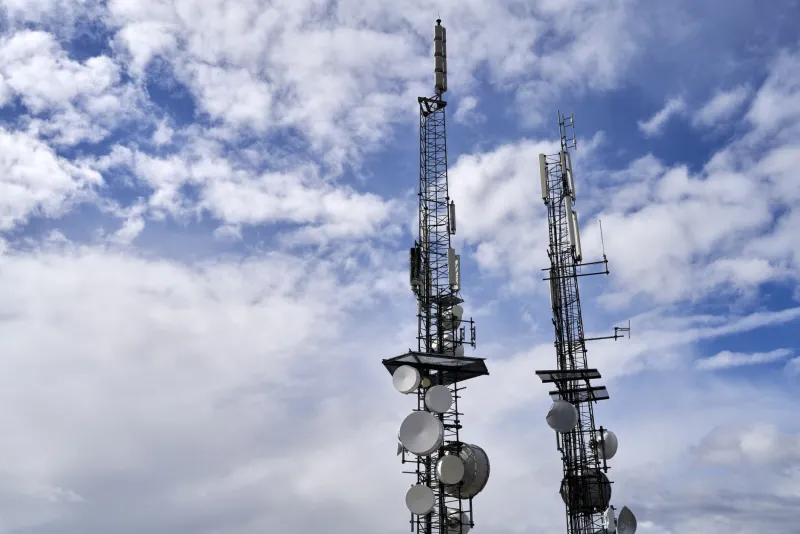
The car isn't broken. The transmitter probably isn't broken either. The issue is that the electromagnetic environment your 27MHz or 40MHz AM radio system was designed for in the mid-1980s looks absolutely nothing like the environment you're running it in today. Back then, your biggest competition for airspace was your neighbor's garage door opener. Now you're fighting Wi-Fi routers, smart home devices, Bluetooth speakers, LED drivers, and yes, 5G infrastructure rolling out across the country. Your vintage radio gear didn't get weaker — the noise floor around it got a whole lot louder.
The good news? You can usually fix this, or at least manage it, without ditching your original radio gear. But you have to be systematic about it.
Start With a Baseline Test — Away From Everything
Before you start blaming the environment, you need to confirm that the problem is actually external interference and not a failing component in your own rig. The best way to do that is to take your car somewhere genuinely quiet: an open field, a rural parking lot, or even your backyard at 6 a.m. on a Sunday. Somewhere without a lot of buildings, devices, or infrastructure nearby.
If the glitching disappears or dramatically improves, you've just confirmed the problem is environmental. If it's still happening in the middle of nowhere, you're dealing with an internal issue — a dirty pot in the transmitter, a failing receiver crystal, a loose antenna connection, or degraded capacitors inside the receiver itself. Those are separate problems worth their own deep dive, but rule them out first.
Assuming the baseline test runs clean, now you can start hunting.
Map Your Interference Zones
Not all interference hits equally in every spot. Modern Wi-Fi routers, especially dual-band units running both 2.4GHz and 5GHz simultaneously, can create localized zones of RF noise that bleed into adjacent frequency bands in ways that aren't always predictable. LED lighting — particularly cheap, unshielded LED strips and bulbs — is a surprisingly nasty source of broadband RF garbage. So are switching power supplies, EV charging stations, and those little USB wall adapters that seem to be in every outlet in America now.
Get a cheap RF signal meter or download a Wi-Fi analyzer app on your phone (they won't show 27MHz directly, but they'll give you a sense of how congested the spectrum around you is). Walk the area where you're running and note where the glitches cluster. If it's always in one corner of the parking lot, look up and around — is there a cell tower nearby? A utility transformer? A building with a ton of wireless access points?
Physical proximity matters. The inverse square law is your friend here: interference drops off fast with distance. Moving your run area even 50 feet away from a strong source can make a meaningful difference.
Check Your Own Gear for Unintended RF Sources
Here's one people miss: your own pit equipment might be the problem. Modern LiPo chargers with switching regulators, laptop power bricks, LED work lights, and even some modern servo testers can radiate enough RF noise to mess with a sensitive vintage AM receiver sitting right next to them on the bench or in a pit bag.
Try this: set your car on the bench, turn the transmitter on, and then one by one, power up every piece of equipment you'd normally have running at a race or meet. Watch for any change in servo jitter or receiver behavior. If something triggers it, you've found a pit-side culprit. Keeping your vintage gear physically separated from modern switching electronics at events is a simple, zero-cost fix.
The Crystal and Antenna Audit
Even if your crystals tested fine last season, it's worth doing a thorough physical inspection. Crystals in both the transmitter and receiver need to be the exact matched pair for your frequency. Mixing brands or using crystals that are even slightly off-spec can narrow your noise immunity margin to almost nothing, meaning interference that a properly matched set would shrug off will now drop your signal.
Check the antenna wire on the receiver, too. On most vintage cars, this is just a length of thin wire routed through the body or along the chassis. If it's been nicked, kinked, coiled up too tightly, or shortened at any point, your receive sensitivity takes a real hit. Full-length, properly routed antennas aren't optional — they're doing actual work.
For the transmitter, inspect the telescoping antenna for corrosion at the joints. A dirty connection between sections acts like a resistor in your signal path and can cut your effective range significantly. A quick wipe-down with contact cleaner and a careful extension to full length costs nothing.
Practical Frequency Management at Events
If you run at organized meets or club events, frequency discipline is still essential with AM gear even though it feels old-fashioned. Two cars on the same frequency will absolutely interfere with each other, sometimes violently. The old peg board system — where you physically hang a clothespin or tag with your frequency on a shared board before powering up — exists for a reason. If your club has abandoned it because everyone's running 2.4GHz modern gear, push to bring it back for vintage classes. It takes two minutes and prevents a lot of headaches.
Also consider which frequency band you're running. In dense urban environments, 27MHz tends to be somewhat less congested than 40MHz right now, but that varies by region. CB radio activity, which shares the 27MHz neighborhood, has dropped off considerably over the years, which actually helps vintage RC runners a bit. The 40MHz band can get more cluttered depending on what's active locally. If you have crystals for both and your radio supports it, it's worth testing both bands at your regular running spot.
When Low-Tech Solutions Beat High-Tech Ones
It's tempting to jump straight to a modern 2.4GHz conversion when signal problems start. And sure, that option exists. But a lot of vintage RC runners specifically want to keep the period-correct radio gear as part of the experience — and honestly, there's real satisfaction in solving the problem on its own terms.
Shielding your receiver in a small wrap of copper tape (grounded to your chassis) can help in some environments. Running a higher-quality crystal set from a reputable supplier rather than no-name eBay stock makes a genuine difference. Keeping your antenna away from the motor and ESC wiring reduces internally generated noise. None of these are glamorous fixes, but they work — and they keep your build authentic.
The vintage RC hobby is about understanding these machines deeply, not just throwing modern solutions at old problems. Track down the noise, address it methodically, and you'll get your signal back. Your car ran reliably for decades. With a little detective work, it can do it again.