Dollar Signs in the Dirt: The Real Cost of Restoring a Vintage RC Car (And Whether It's Ever Worth It)
Photo: Biswarup Ganguly, CC BY 3.0, via Wikimedia Commons
There's a particular kind of optimism that hits every vintage RC hobbyist at some point. You're scrolling eBay at midnight, you find a beat-up 1987 Kyosho Optima with a cracked chassis and no electronics listed as "parts only," and your brain immediately starts doing the math. How bad could it be? I'll just clean it up, source a few parts, slap in some electronics. Easy flip.
Three months and $340 later, you've got a runner that's worth maybe $180 on a good day.
We've all been there. And it's time somebody laid out the real numbers.
The Romance vs. The Reality
Let me be clear upfront: this isn't an argument against restoration. Rebuilding a classic RC car is genuinely satisfying, and for a lot of us, the hobby isn't primarily about profit. But there's a meaningful difference between restoring something because you love the process and restoring something because you think you're going to make money—or at least break even.
The problem is that the vintage RC market has matured significantly over the past decade. Prices on desirable platforms have climbed, NIB (new-in-box) examples fetch serious collector premiums, and the pool of truly undervalued "barn finds" has shrunk. What looked like a buyer's market five years ago is increasingly competitive, and that changes the math on restoration dramatically.
The Hidden Costs Nobody Talks About
When hobbyists calculate a restoration budget, they typically account for the obvious stuff: replacement gears, a new body shell, maybe a set of tires. What they routinely underestimate—or ignore entirely—are the soft costs.
Shipping. Vintage parts often come from individual sellers across the country, or from overseas suppliers in Japan and Europe. A single order from a Japanese parts dealer can add $15–$30 in shipping per transaction. If your restoration requires five or six separate parts orders, that's real money before you've even picked up a screwdriver.
Time. Your hours have value. If you're spending 20 hours sourcing, cleaning, and assembling a car that you plan to sell, that labor is invisible on the spreadsheet but very real in your life. Hobbyists who restore for personal enjoyment can reasonably discount their time. Anyone treating this as a side hustle cannot.
Tools and consumables. Bearing replacement kits, diff fluid, threadlocker, polycarbonate paint, masking tape, body reamers—these aren't expensive individually, but they add up across a project. A first-time restorer who doesn't already own a full toolkit is looking at an additional $50–$100 in startup costs.
The "while I'm in there" problem. This is the killer. You open a gearbox to replace one stripped gear and discover the diff is also worn. You replace the diff and notice the suspension arms are cracked. Every layer of a restoration tends to reveal another layer underneath. Budget overruns of 40–60% are common on cars that weren't properly assessed before purchase.
Case Study: The Wins
Not every restoration is a money pit. The projects that tend to pay off share a few common traits.
The RC10 Gold Pan Flip. A hobbyist in the Midwest picked up a complete but non-running Associated RC10 gold pan chassis at a swap meet for $65. The car needed a new motor, a battery connector replacement, and a thorough cleaning—total parts cost around $45. After photographing it well and selling it on eBay with full documentation of the restoration, it sold for $210. Net profit after fees: roughly $75. Not life-changing, but a genuine win.
The key here was completeness. The car had all its original parts, needed only mechanical work (not structural repair), and belonged to one of the most desirable platforms in vintage RC. Provenance and platform matter enormously.
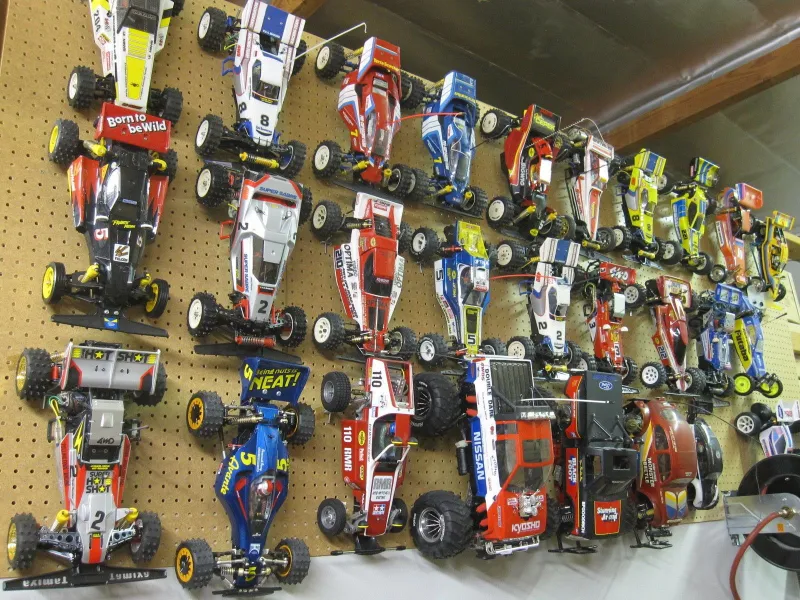
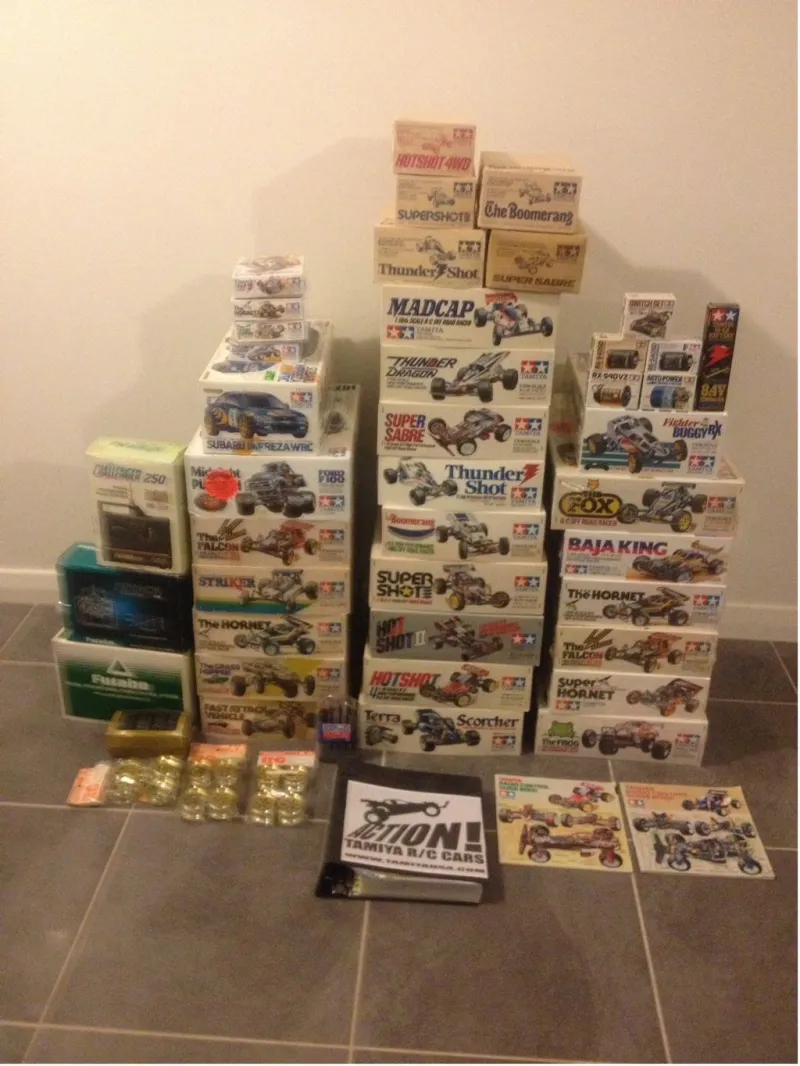
The Tamiya Re-Release Arbitrage. This is a different kind of play. Tamiya has re-released many of its classic kits in recent years—the Hornet, the Frog, the Wild One. Savvy hobbyists buy these new, build them with period-correct electronics, weather them lightly for authenticity, and sell them as "vintage-style runners" to buyers who want the experience without the hunt. Margins are modest but consistent.
Case Study: The Losses
The Cosmetically Destroyed Optima. A collector purchased what was described as a "project car" Kyosho Optima for $90, expecting surface-level damage. The chassis turned out to have stress cracks near the motor mount—a structural problem that required sourcing a replacement chassis tub, which ran $55 from a Japanese parts supplier (plus $22 shipping). New bearings, a body shell, and decals added another $70. Final investment: $237. Final sale price after six weeks listed: $195. Loss of $42 plus roughly 15 hours of labor.
The lesson: always assess structural integrity before purchasing a project car. Cosmetic damage is fixable cheaply. Structural damage is expensive and often invisible in listing photos.
When to Rebuild, Retire, or Flip
Here's a simple framework that cuts through the noise:
Rebuild if: The platform is personally meaningful to you, the car is structurally sound, and you're comfortable spending more than you'll recoup. Restoration as a hobby experience is valid and doesn't require a positive financial return.
Retire it if: The car is missing too many original parts to be authentic, structural damage makes it unsafe to run, or the platform has low collector demand and limited parts availability. Some cars are better preserved as display pieces or parted out for others.
Flip it if: You found genuine value—a complete, running car priced below market because the seller didn't know what they had—and you can clean it up, document it properly, and move it quickly. The flip window on vintage RC is narrow; the longer a project sits, the more emotional attachment (and money) you pour into it.
The Bottom Line
The vintage RC market rewards knowledge more than anything else. Knowing which platforms hold value (RC10, Tamiya Lunch Box, Kyosho Optima, Losi JRX2), understanding what "complete" really means for a given model, and being honest about structural condition before you buy—these skills separate the hobbyists who come out ahead from those who consistently overpay for heartache.
Restoration is worth it. Just make sure you know why you're doing it before the parts invoices start stacking up.