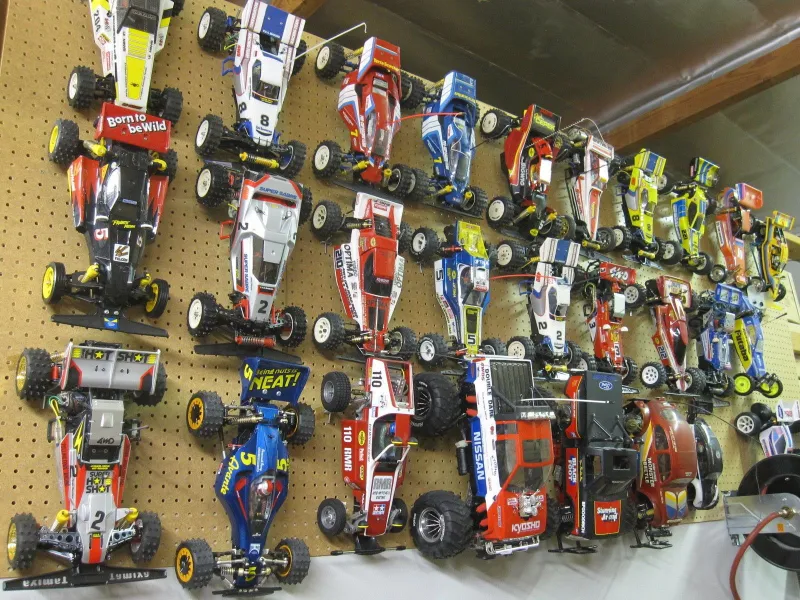
Fumes or Volts: Picking the Right Vintage RC Powertrain for Your Wallet and Skill Level

Photo: Biswarup Ganguly, CC BY 3.0, via Wikimedia Commons
There's a moment every vintage RC restorer eventually hits. You've got the chassis stripped down, the body sanded, and a fresh coat of paint drying in the garage. Then comes the question that splits the hobby right down the middle: do you put a nitro engine back in this thing, or do you drop in a brushless motor and call it a day?
It's not a small decision. Your choice of powertrain shapes everything from your Saturday afternoon maintenance routine to how much you'll spend chasing down parts five years from now. Let's dig into both sides honestly, because there's no single right answer here — just the right answer for you.
The Case for Nitro: Sound, Smell, and Soul
Ask any old-school RC guy why he runs nitro, and the first thing out of his mouth probably isn't "efficiency." It's the experience. There's something genuinely irreplaceable about a tuned .21 engine screaming across a dirt oval, trailing a little blue exhaust smoke. For a lot of collectors, that sensory package is the hobby.
Classic nitro platforms — think early Kyosho Infernos, Associated RC10Ts, or the original Traxxas T-Maxx — were designed around internal combustion from the ground up. The fuel tanks, exhaust routing, and chassis flex points all reflect that engineering heritage. Running them on nitro keeps the experience historically accurate in a way that matters to purists.
On the performance side, a well-tuned nitro engine delivers a power curve that feels organic. Throttle response has a certain analog quality — it breathes, it surges, it requires attention. That's a feature, not a bug, for the crowd that loves the mechanical connection between driver and machine.
Real-world nitro costs to expect:
- Quality nitro fuel (20–30% blend): $25–$35 per gallon
- Glow plugs: $3–$8 each, replaced every few tanks
- Air filters, fuel tubing, needle valves: $50–$100 annually
- Engine rebuild or replacement (vintage .15–.21 engines): $80–$250 depending on availability
That last number is where things get complicated. Sourcing vintage nitro engines or matching replacement carburetors for discontinued platforms is increasingly tough. OS Engines, Novarossi, and old Picco powerplants don't exactly flood eBay the way they used to. You're hunting, not shopping.
The Case for Electric: Accessibility, Reliability, and Modern Muscle
Electric conversions on vintage platforms have become remarkably sophisticated over the last decade. A well-planned brushless swap into a classic Tamiya Frog or an old Losi JRX2 can deliver performance that would have seemed like science fiction in 1988 — while actually being easier to maintain.
For newer hobbyists or folks returning to the hobby after years away, electric is the lower-friction entry point. You're not tuning a needle valve in a parking lot while your buddies wait. You charge a battery, you run, you charge again. The learning curve is real but manageable, and the troubleshooting is far more forgiving.
Modern LiPo batteries and brushless motor systems are also cheap and widely available. Castle Creations, Hobbywing, and Tekin all make systems that fit classic chassis with minimal modification. Parts are a trip to Amazon away, not a three-month eBay search.
Real-world electric conversion costs:
- Entry-level brushless motor/ESC combo: $60–$120
- Quality LiPo battery (2S–3S): $30–$60
- Charger (if you don't have one): $40–$80
- Connectors, wiring, battery tray modifications: $20–$40
All in, a solid electric drivetrain for a vintage chassis can run $150–$300 — often less than sourcing and rebuilding a period-correct nitro engine. And once it's in, your ongoing costs drop significantly.
The tradeoff? Some collectors feel an electric vintage RC loses a piece of its identity. That's a legitimate concern, and it's worth sitting with before you make the cut.
Maintenance Complexity: Be Honest About Your Patience
Nitro engines reward patience and mechanical curiosity. If you genuinely enjoy tinkering — pulling a carb apart, cleaning the sleeve, adjusting the high-speed needle — nitro will scratch that itch every single session. If you'd rather be running than wrenching, nitro will frustrate you.
Electric systems are not maintenance-free, but the maintenance is simpler and less time-sensitive. You're checking motor temps, inspecting solder joints, monitoring battery health. It's less intimate than engine work, but it's also less likely to strand you mid-run.
For beginners or intermediate builders, electric is the smarter call. For experienced mechanics who love the process, nitro is the richer experience.
Long-Term Parts Outlook
This is where the calculus really shifts. Vintage nitro-specific parts — especially carburetors, connecting rods, and crankshafts for discontinued engines — are on a slow disappearing act. Some platforms have active aftermarket support; many don't. Before committing to a nitro restore, research your specific engine model and make sure parts are actually findable.
Electric components, by contrast, are largely interchangeable across eras and brands. A brushless motor from 2024 drops into a 1991 chassis without drama. Bearings, pinions, spur gears — these are commodity parts that will be available for decades.
The Verdict (Sort Of)
If you're a detail-obsessed restorer chasing historical accuracy and you've got the mechanical chops to support it, nitro is your platform. The experience is unmatched, and the challenge is part of the point.
If you're budget-conscious, newer to the hobby, or just want to spend more time driving than diagnosing, electric gives you more running time per dollar and far less headache. It's also the smarter long-term bet from a parts availability standpoint.
The good news? You don't have to pick a side forever. Plenty of collectors run nitro at the track and keep an electric backup in the bag. The vintage RC world is big enough for both — and honestly, that's part of what makes it so great.