Old Bones, New Heart: How to Build a Vintage RC Hybrid That Actually Rips
Photo: Biswarup Ganguly, CC BY 3.0, via Wikimedia Commons
Call it a Frankenbuild. Call it a restomod. Call it sacrilege if you must. Whatever name you give it, the practice of grafting modern electronics and drivetrain components into vintage RC chassis has quietly become one of the most exciting corners of the hobby.
The appeal is obvious once you think about it. Classic RC platforms from the 1980s and early 90s were often genuinely well-engineered—simple, robust, and full of character. What held them back wasn't the chassis geometry or the suspension design; it was the technology of the era. Silver-can motors with mediocre torque curves. Mechanical speed controllers that ate current and generated heat. Bulky receiver packs that compromised weight distribution.
Strip all that out, drop in a modern brushless motor, a quality ESC, and a LiPo pack, and suddenly that 40-year-old buggy is a different animal entirely.
Here's how to do it well.
Choosing the Right Vintage Platform
Not every classic chassis is a good candidate for a hybrid build. Some were mediocre designs even when new, and no amount of modern electronics will fix fundamentally flawed suspension geometry. Others are so historically significant that modifying them feels like a waste of a good collectible. The sweet spot is a platform that was genuinely capable for its era, is available in built or partially built condition at reasonable prices, and has enough internal real estate to accommodate modern components.
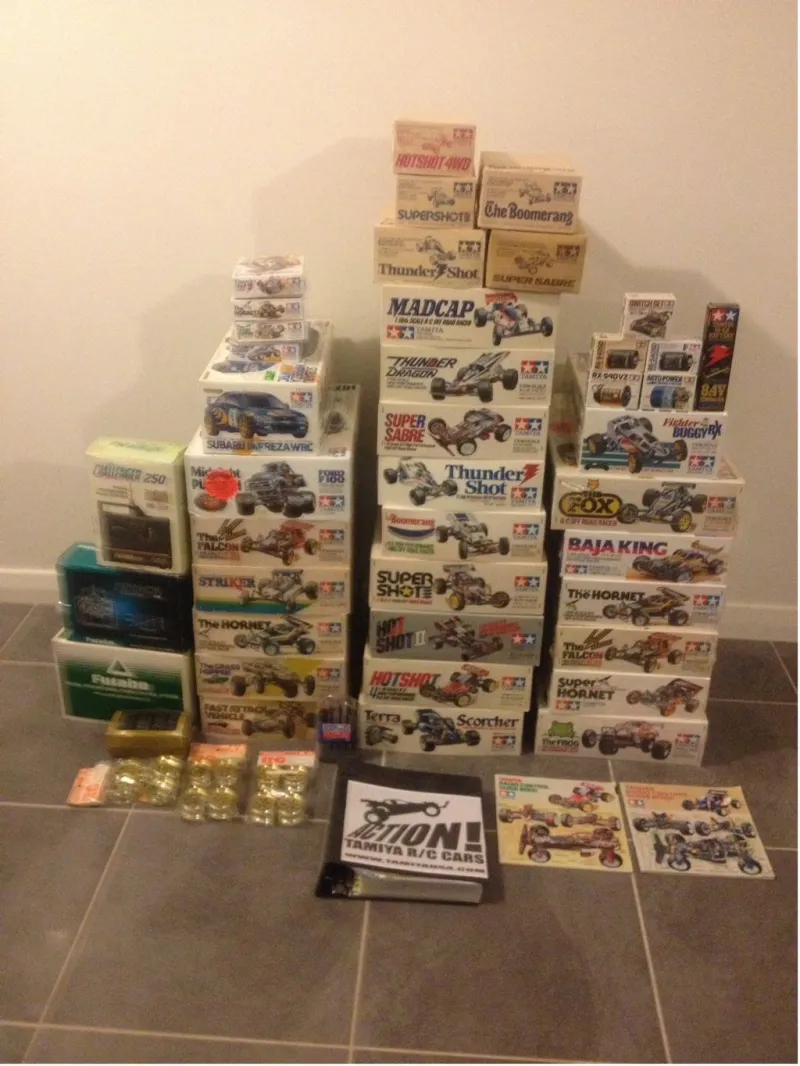
Tamiya Hornet / Grasshopper family — These are the gateway drug of the hybrid world for good reason. The tub chassis is spacious, replacement parts are still widely available, and the basic rear-wheel-drive layout is forgiving to work with. A brushless conversion on a Hornet is an afternoon project for anyone with basic mechanical skills.
Tamiya Blackfoot / Monster Beetle — The tall, truck-style body shells on these models give you room to work, and the visual contrast between the vintage aesthetic and modern performance is particularly striking. The Blackfoot platform handles brushless power surprisingly well with minimal modifications to the drivetrain.
Associated RC10 (original gold tub) — This one's for more experienced builders. The RC10 is legitimately iconic, and finding beaters in built condition is getting harder. But when you do find one, the aluminum tub chassis is an exceptional foundation. These cars were competitive at the national level in their day, and a properly built brushless RC10 can still hold its own on an oval or carpet track.
Kyosho Ultima / Optima series — Underrated in the hybrid community but worth serious consideration. The four-wheel-drive Optima platform in particular responds extremely well to modern power systems, and the mid-engine layout allows for excellent weight distribution once you've freed up space by removing old electronics.
The Core Upgrade Stack
A successful hybrid build typically involves three major component swaps. Think of them as a package—they work best together.
Motor and ESC
For most vintage platforms, a sensored brushless motor in the 17.5T to 13.5T range is the right starting point. Sensored systems provide smoother low-speed control, which matters a lot on vintage chassis that weren't designed for the instant-on torque of a modern motor. Brands like Hobbywing, Castle Creations, and Tekin are all well-regarded in the community.
Pair your motor with an ESC that has adjustable punch settings. Vintage chassis often have less structural rigidity than modern cars, and hammering full throttle from a standstill repeatedly will eventually stress joints and bulkheads that were never designed for that kind of load.
Common pitfall: Don't go too hot too fast. A 10.5T motor in a Hornet will be fast—and will also strip the stock plastic gears on the second run. Match the power level to the drivetrain's actual capability.
Battery
Switching from old NiMH or NiCd packs to LiPo is arguably the single biggest performance upgrade you can make. Modern 2S LiPo packs are lighter, hold voltage better under load, and deliver consistent power throughout the run rather than tapering off as the pack discharges.
Fit is the main challenge here. Measure your battery tray carefully before buying. Many vintage tubs were sized for stick-style NiMH packs, and saddle-pack LiPos won't fit without modification. Short 2S packs or "shorty" format batteries often solve the fitment problem without requiring you to cut or modify the chassis.
Radio System
Yes, you can keep running that vintage Futaba or Airtronics radio if it brings you joy—but if you're building a serious runner, a modern 2.4GHz system will eliminate the range and interference issues that plagued 27MHz and 75MHz equipment. Budget options from Flysky or RadioLink work fine for bashing; if you're racing, step up to Spektrum or Futaba's current lineup.
3D-Printed Upgrades: What's Worth It
The 3D printing revolution has been genuinely transformative for vintage RC builders. Parts that were unobtainium five years ago—body mounts, battery trays, motor mounts for non-standard motors—are now downloadable files away from being real objects.
The Thingiverse and Printables communities have active vintage RC sections, and dedicated Facebook groups for specific models often have members sharing custom files. A custom motor mount that positions a modern 540-size brushless motor correctly in a Tamiya tub chassis, for example, can be printed in PETG for about $2 in material.
What's less worth it: structural components under high stress. Printed plastic, even in tough filaments like PETG or ABS, doesn't absorb impact the way injection-molded parts do. Use printed parts for brackets, mounts, and cosmetic pieces. Use stock or aftermarket injection-molded parts for bulkheads, A-arms, and anything that takes direct crash loads.
Keeping the Classic Look
The aesthetic is half the point of a hybrid build. A vintage-looking car that happens to be terrifyingly fast is the whole fantasy. A few principles to keep the look intact:
- Retain the original body shell whenever possible. Even a cracked or faded shell can be cleaned up with careful polishing and new decals. Several vendors still produce reproduction decal sheets for popular models.
- Hide modern components under classic lines. A LiPo pack under a Blackfoot bed looks the same as an old stick pack from the outside. Route wires neatly and keep visible components period-correct where you can.
- Match wheel and tire style to the era. Modern tires on vintage wheels look wrong. Seek out reproduction or NOS (new old stock) rubber, or find modern tires that closely match the profile of the originals.
Real Builds From the Community
Across forums and Instagram, builders are pushing this concept in creative directions. One builder in Colorado documented a full RC10 restomod using a 13.5T sensored brushless system, a carbon fiber chassis brace he fabricated himself, and a hand-painted reproduction body. The car runs on a modern 2S LiPo and laps a local carpet track faster than most purpose-built modern buggies in the same class.
Another enthusiast in Tennessee built a Tamiya Monster Beetle hybrid specifically for backyard bashing with his kids—the goal was maximum visual nostalgia with enough modern reliability that it wouldn't need constant maintenance. He reports it's survived two years of regular use without a single electronics failure.
The common thread in the best hybrid builds is intentionality. The builders knew what they wanted the car to do, chose components accordingly, and didn't just throw the newest and most powerful stuff at an old chassis and hope for the best.
That's really the art of the Frankenbuild: respecting what the original designers got right while solving what the technology of the era couldn't. Do that well, and you end up with something genuinely special—a car that looks like history and drives like the future.