To Drive or Display: The Great Vintage RC Preservation Debate
Photo: Biswarup Ganguly, CC BY 3.0, via Wikimedia Commons
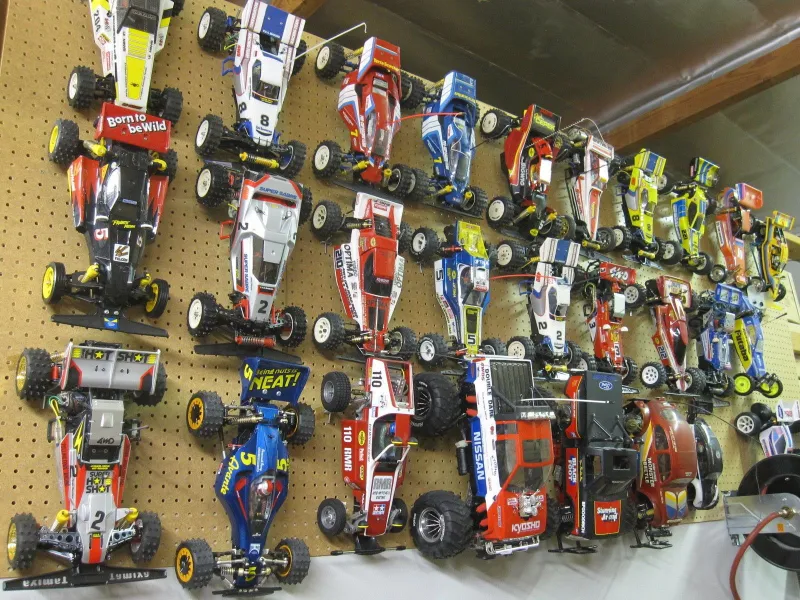
There's a moment every vintage RC collector knows well. You're standing in front of a shelf, staring at a sealed box—maybe it's a first-run Tamiya Frog, maybe it's an Associated RC10 still wrapped in original factory plastic. The sticker on the bottom says you paid more than you'd like to admit. And somewhere in the back of your brain, two voices start arguing.
Drive it. No, display it.
This tension is as old as the hobby itself, and it doesn't have a clean answer. But it's worth talking through, because how you land on this question says a lot about why you got into vintage RC in the first place.
The Case for Keeping It Sealed
Let's start with the preservation camp, because honestly, their logic is hard to argue with on a purely financial level.
Mint-in-box (MIB) vintage RC cars—especially first-run Tamiya kits from the early 1980s, or factory-sealed Associated and Kyosho models—have appreciated steadily over the past decade. A sealed Tamiya Hornet in excellent box condition that sold for $80 at a garage sale in 2012 can fetch $300 to $500 on eBay today depending on the variant and box art. Rarer models like the Tamiya Lunch Box or the original Boomerang in sealed condition regularly clear four figures among serious collectors.
Mark D., a hobbyist out of Phoenix who runs a small side business buying and reselling vintage kits, puts it bluntly: "The moment you open that box, you've already lost 30 to 40 percent of the resale ceiling. It doesn't matter how carefully you build it. Opened is opened."
Beyond dollars, there's a preservation argument that goes deeper than money. These kits are artifacts. The instruction sheets, the original decals, the factory smell of fresh styrene—that's a slice of 1983 that can't be recreated. Once it's gone, it's gone. Some collectors see themselves less as hobbyists and more as custodians, keeping history intact for the next generation.
The Case for Actually Using the Thing
Here's where the drivers push back, and they push back hard.
"These cars were built to be driven," says Lisa T., who runs a vintage RC racing club out of central Ohio. "Tamiya didn't design the Roughrider to sit under fluorescent lights. They designed it to eat gravel and slide through corners. When I see a perfect-condition RC10 that's never turned a wheel, it makes me a little sad."
She's got a point that goes beyond sentimentality. Part of what makes vintage RC culture special is the experience of running these machines—the way an old Futaba stick radio feels in your hands, the high-pitched whine of a silver-can motor, the satisfying clunk of a mechanical speed controller engaging. You simply cannot get that from a display piece.
There's also a generational argument here. A lot of us got into this hobby because a parent or older sibling let us run their RC car in a parking lot one summer afternoon. That moment of shared experience is what creates the next wave of enthusiasts. A hobby that only collects and never runs risks becoming a museum culture rather than a living one.
What the Rarity Factor Actually Means
Not all vintage RC cars are created equal, and rarity should genuinely influence your decision-making here. It's worth being honest with yourself about what you actually have.
A common kit like the Tamiya Grasshopper, which sold in the millions and still turns up regularly at estate sales and swap meets, is a very different proposition than, say, a first-edition Tamiya Sand Scorcher with original box art and all accessories. The Grasshopper can be built, enjoyed, and even crashed without any meaningful impact on the hobby's historical record—there are thousands of them. The Sand Scorcher is a different conversation entirely.
Some useful questions to ask yourself before making the call:
- How many sealed examples are realistically still out there? If you can find three others on eBay right now, you're probably not the last guardian of this particular artifact.
- Is the box itself in pristine condition? Box condition is often what separates a $200 kit from a $600 one. A crushed corner changes the math.
- Do you actually plan to display it long-term, or will it end up in a closet? Be honest. A lot of sealed kits sit in storage, which benefits no one.
The Hybrid Approach: Having It Both Ways
Here's the thing nobody tells you when you're new to the hobby: you don't actually have to choose.
A growing number of collectors have adopted what you might call the "runner and a keeper" strategy. When they find a sealed example of a model they love, they acquire a second built or partially built version specifically to run. The sealed kit stays sealed. The runner gets driven, modified, and enjoyed without guilt.
This approach does require patience and a willingness to spend more overall, but it solves the psychological problem neatly. You're not sacrificing the collectible to get the experience—you're maintaining both.
Alternatively, if you do decide to open and build a kit, document everything. Photograph each stage of the build, keep all original packaging, and store the box carefully. A well-documented, carefully built vintage RC kit with all original parts and packaging retained still commands serious interest from buyers who want the experience of ownership without the build process.
Where Personal Values Come In
Ultimately, this debate circles back to a question only you can answer: why are you in this hobby?
If the answer is investment and historical preservation, the sealed approach makes sense—and there's real value in what you're doing. If the answer is the joy of building, racing, and connecting with other enthusiasts over shared experiences, then driving it is the right call, full stop.
Most of us, if we're honest, are somewhere in the middle. We love the history, we love the cars, and we want to feel the nostalgia of running something that was built before we could drive a real car. There's no wrong answer here—just different expressions of the same passion.
What we'd caution against is letting the decision paralyze you. A vintage RC car that sits in limbo—neither properly displayed nor ever driven—is probably the worst outcome of all. Pick your path, commit to it, and enjoy the hobby you've built.
Because at the end of the day, that's what this is supposed to be: fun.